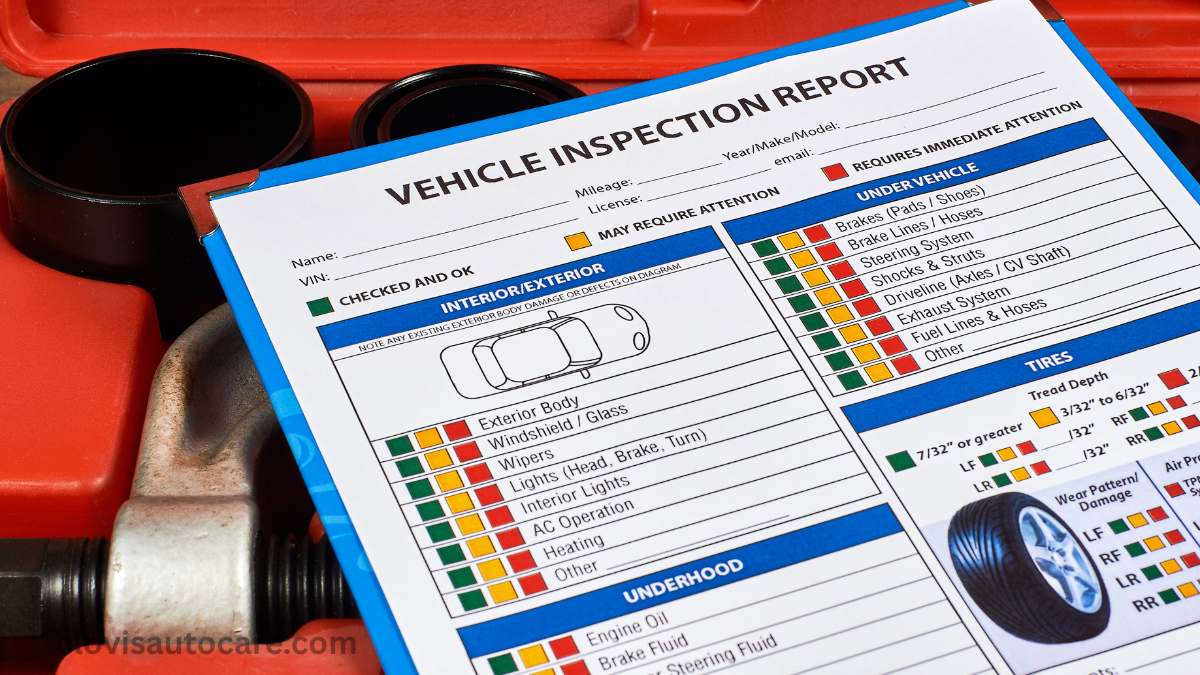
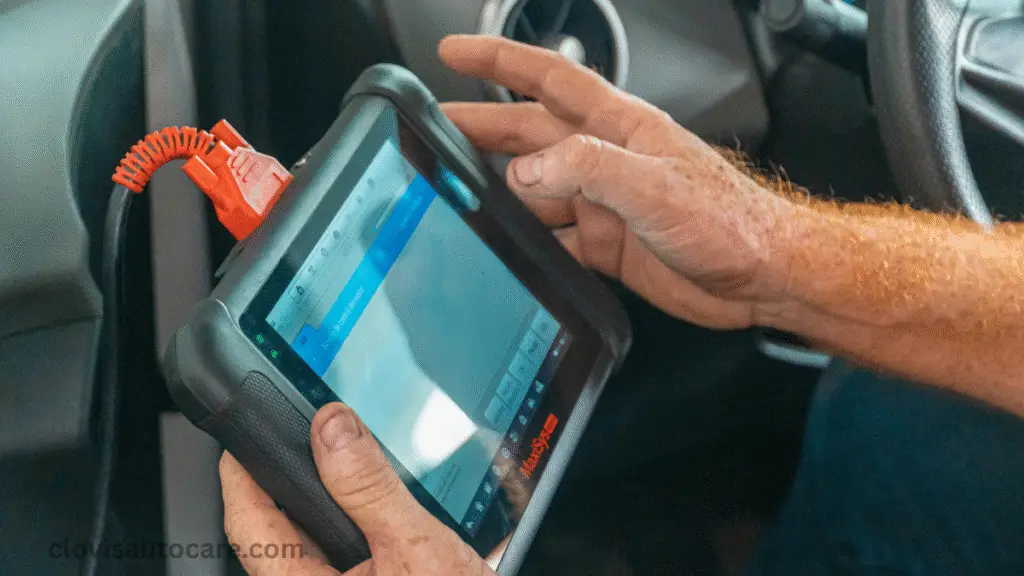
A car inspection checklist is not a seasonal preparation guide. It is a system-by-system record of exactly what a state-licensed inspector evaluates, what the pass/fail threshold is for each item, and what it costs to fix the most common failure reasons. This page covers both.
What Every State Inspector Evaluates
Regardless of state, all safety inspections follow the same core systems. The criteria below reflect what causes actual failures, not just what gets glanced at.
Brakes
| What gets checked | Pass/fail threshold |
|---|---|
| Brake pad thickness | Minimum varies by state; most flag under 2mm |
| Rotor condition | No cracks, grooves deeper than manufacturer spec, or hard spots |
| Brake lines and hoses | No leaks, kinks, or visible deterioration |
| Parking brake function | Must hold vehicle on a grade |
| Brake pedal feel | No excessive travel, sponginess, or pull to one side |
Brakes are the most common safety inspection failure category. Pad and rotor wear is the leading cause.
Repair cost if you fail:
- Brake pads (one axle): $100–$350
- Pads + rotors (one axle): $300–$600
- Pads + rotors (all four): $600–$1,200
Tires
| What gets checked | Pass/fail threshold |
|---|---|
| Tread depth | Minimum 2/32″ — most inspectors use a tread depth gauge |
| Sidewall condition | No bulges, cuts, or exposed cord |
| Inflation pressure | Must be within manufacturer spec |
| Matching tire sizes | All four must match or be within acceptable variance |
Tire defects are the most prevalent defect type found in vehicles involved in fatal crashes, appearing in 23.5% of inspection histories, according to Auto Care Association data.
Repair cost if you fail:
Budget $100–$200 per tire for standard passenger vehicles installed at a shop.
Lights and Electrical
| What gets checked | Pass/fail threshold |
|---|---|
| Headlights (low and high beam) | Both must function; aim must not blind oncoming traffic |
| Brake lights | All must illuminate when pedal is pressed |
| Turn signals (front and rear) | Correct flash rate; no fast-flash indicating a burned bulb |
| Reverse lights | Must illuminate in reverse gear |
| License plate light | Must be functional |
| Hazard lights | Both sides must flash simultaneously |
This is one of the easiest categories to fix before showing up.
Repair cost if you fail:
- Halogen headlight bulb (DIY): $25–$50
- LED/HID headlight module replacement: $150–$1,000+ depending on vehicle
- Cloudy headlight restoration (DIY kit): ~$25; professional: ~$150
- Tail light bulb: $20–$50 DIY
Steering and Suspension
| What gets checked | Pass/fail threshold |
|---|---|
| Steering play | Measured in degrees; excessive play indicates worn linkage |
| Ball joints | Checked for play by lifting the wheel; movement beyond spec is a fail |
| Tie rod ends | Inspected for looseness or torn boots |
| Shocks and struts | Leaking fluid or bounce that exceeds specification |
| Wheel bearings | Checked for grinding noise or lateral play |
Approximately 51% of shocks and struts need replacement around 100,000 miles (AAA data). Inspectors check for oil leaks and worn bushings.
Windshield and Visibility
| What gets checked | Pass/fail threshold |
|---|---|
| Windshield cracks | Cracks in driver’s direct line of sight typically fail; NJ threshold is 6 inches |
| Wipers | Must clear the windshield effectively; torn blades are a fail |
| Mirrors | Driver’s side mirror required; passenger side required if rear visibility is obstructed |
| Window tint | Must meet state legal limits for front windows |
Seatbelts and Safety Equipment
| What gets checked | Pass/fail threshold |
|---|---|
| Seatbelt function | Must latch, retract, and lock under sudden movement |
| Horn | Must be audible at a specified distance |
| Airbag warning light | An illuminated airbag light is an automatic fail in most states |
Emissions Test: What Gets Checked
Emissions testing is separate from safety inspection and not required in every state or county. Where it applies, inspectors check:
| Test | What it detects |
|---|---|
| OBD-II scan | Reads stored and pending fault codes from the engine control module |
| Readiness monitors | Confirms all emissions-related systems have completed their self-tests |
| Fuel cap (evaporative leak) test | Checks for fuel vapor escaping from the fuel system |
| Visual inspection | Confirms catalytic converter and other emissions equipment is present |
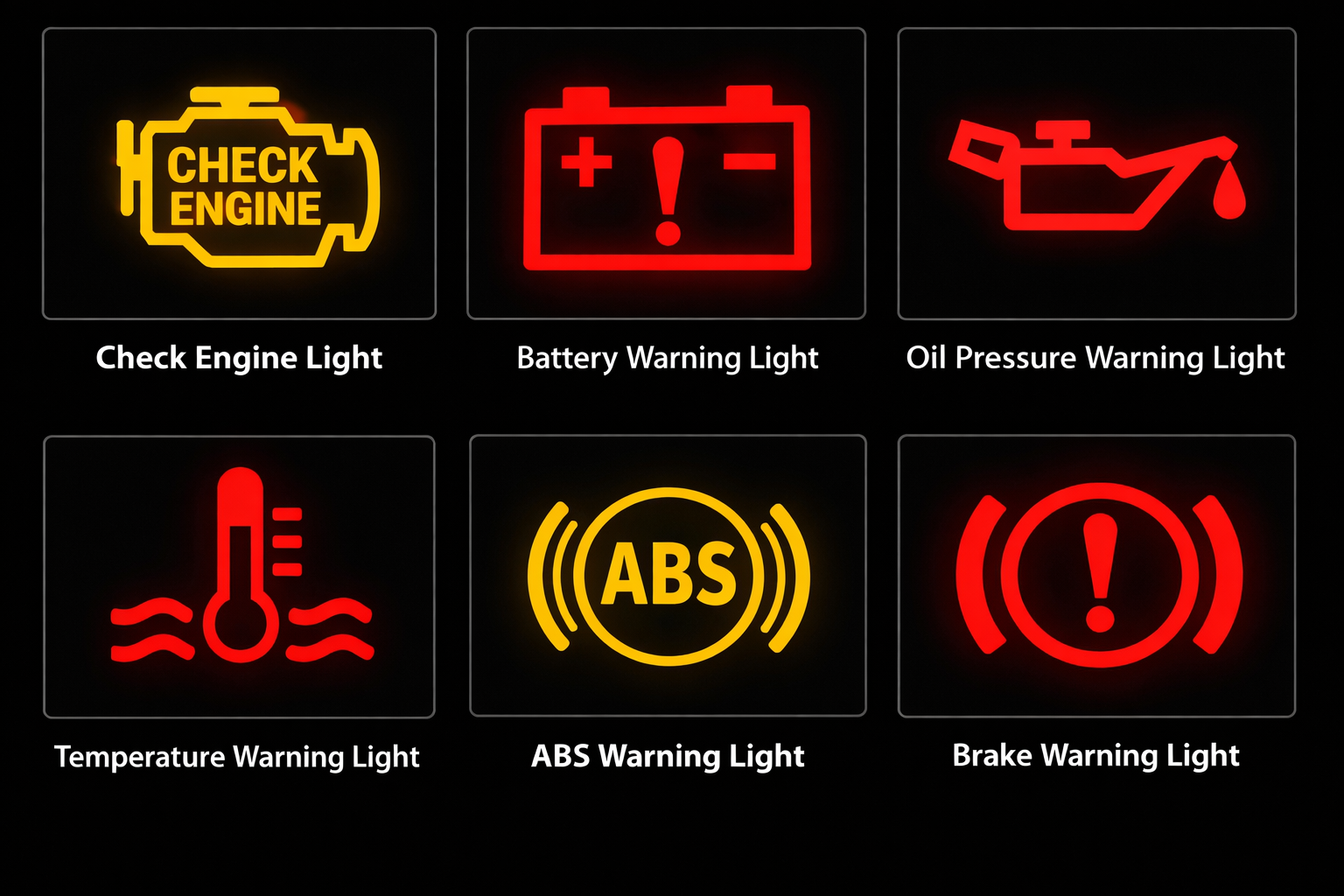
The single most common emissions failure cause is an illuminated Check Engine light. If the light is on, the OBD-II scan will surface the fault code and you will fail before any other test is run.
Repair cost for the most common emissions failures:
| Repair | Average cost |
|---|---|
| O2 sensor replacement | $200–$500 per sensor ($243 average) |
| Catalytic converter replacement | $1,000–$4,000 at a shop ($1,356 average) |
| Ignition coils + spark plugs | ~$387 average |
| Mass air flow sensor | ~$304 average |
| EVAP purge control valve | ~$137 average |
| Check Engine light diagnosis | $50–$233 depending on shop |
New Jersey car Inspection Checklist
What NJ Inspects
NJ requires two inspection types for most registered vehicles:
- Safety inspection — covers all systems in the checklist above; required for all registered vehicles including EVs
- Emissions test — required for gasoline-powered vehicles 5 years old and older; EVs, hybrids, and motorcycles are exempt
NJ Inspection Schedule
| Vehicle type | Inspection frequency |
|---|---|
| New vehicles | First inspection at 5 years |
| Gas-powered vehicles | Every 2 years after first inspection |
| EVs and hybrids | Safety inspection every 5 years; no emissions test |
| Commercial vehicles | Annual |
NJ Costs and Facilities
| Facility type | Cost |
|---|---|
| State-run inspection center | Free |
| Licensed private inspection facility | ~$20–$100 |
New Jersey has 339 state-run centralized inspection facilities and over 1,500 certified Emissions Repair Facilities (ERFs) registered with the NJ MVC.
NJ-Specific Rules Worth Knowing
- No grace period after a failed inspection. A red failed sticker does not prevent citations.
- Reinspection window: Up to 1 month from the last day of the expiration month on your sticker.
- Emissions repair requirement: Must be done at a certified Emissions Repair Facility (ERF), or DIY with receipts.
- Repair waiver: If emissions repairs exceed $200 and the vehicle still fails, you may apply for a state waiver.
- Extensions: Up to 2 weeks for out-of-state travel, illness, or extensive repairs in progress.
- Fuel savings: Properly maintained emissions systems improve fuel economy by 6–13% (NJ MVC data).
What Causes NJ Inspection Failures
The most common failure reasons in NJ, in order of frequency:
- Check Engine light on (OBD-II fault codes)
- Brake wear below minimum threshold
- Tire tread below 2/32″
- Windshield cracks in the driver’s line of sight
- Non-functioning lights (headlights, brake lights, turn signals)
- Emissions readiness monitors not completed (usually after a recent battery reset)
NJ-specific trap: If you recently had your battery replaced, your vehicle’s emissions readiness monitors may not have completed their cycle. Drive 100–200 mixed miles before going for inspection. Going too soon means the monitors will show “not ready” and you will fail even with no underlying faults.
Texas Inspection Checklist
Major 2025 Change: Safety Inspection Eliminated for Non-Commercial Vehicles
As of January 1, 2025, Texas eliminated the annual safety inspection requirement for non-commercial passenger vehicles. The $7.50 per year inspection replacement fee is now collected at registration. New vehicles pay $16.75 covering the first two years.
What this means: Texas passenger vehicle owners no longer go to a safety inspection lane. Only emissions testing remains, and only in specific counties.
Texas Emissions Testing: Which Counties Require It
| Region | Counties |
|---|---|
| DFW Metroplex | Collin, Dallas, Denton, Ellis, Johnson, Kaufman, Parker, Rockwall, Tarrant |
| Houston (HGB) | Brazoria, Fort Bend, Galveston, Harris, Montgomery |
| El Paso | El Paso |
| Austin area | Travis, Williamson |
| San Antonio (starting 2026) | Bexar |
If you do not live in one of these counties, no vehicle inspection of any kind is required for personal vehicles in Texas.
Texas Emissions Test Costs
| Location | Cost |
|---|---|
| El Paso / Travis / Williamson counties | $11.50 |
| DFW / Houston area (emissions only, 2025) | $18.50 |
Texas Emissions Failure Rates and Repair Costs
First-time failure rate: 10.3% statewide average (range: 7.5%–12.5%), per Auto Care Association data.
Average emissions repair costs in Texas by region (TCEQ data):
| Region | Average repair cost |
|---|---|
| DFW / Houston (HGB) | $293 |
| El Paso | $379 |
| Austin area (ARR) | $296 |
Before You Go: Pre-Inspection Checklist
Use this to eliminate easy failure reasons before pulling into the inspection lane.
Lights (5 minutes, free)
- Walk around the vehicle and check all exterior lights while a helper presses the brake pedal and activates signals
- Replace any burned bulb before going — a $5–$50 bulb versus a return visit
Check Engine light
- If the light is on, get a free OBD-II scan at any auto parts store before going
- Do not reset the light without fixing the underlying fault — cleared codes with unready monitors will still fail emissions
Tires
- Check tread with a quarter: if the top of Washington’s head is visible, you are near the legal minimum
- Check inflation pressure cold against the sticker on the driver’s door jamb
Windshield
- Check for cracks in the driver’s direct sightline — a crack longer than 6 inches is an automatic NJ fail
- Confirm wipers clear the glass without streaking
Documents to bring
- Current vehicle registration
- Driver’s license
- Proof of insurance (NJ requires minimum liability coverage)
FAQ
What is the most common reason for failing a car inspection?
An illuminated Check Engine light is the single most common cause of emissions test failures. For safety inspections, brake wear and tire tread below the minimum threshold are the two leading failure reasons.
Can I drive after failing inspection in NJ?
There is no grace period after a failed NJ inspection. A red failed sticker does not protect you from citations. Arrange repairs promptly.
How long does a car inspection take?
Most state-run facilities complete both safety and emissions testing in 15–30 minutes. NJ state centers are typically fastest midweek between 8–10 AM or 1–3 PM.
Does Texas still require a car inspection in 2025?
Texas eliminated the safety inspection requirement for non-commercial passenger vehicles on January 1, 2025. Emissions testing still applies in 17 counties. All other Texas counties have no inspection requirement for personal vehicles.
What if I just replaced my battery before the inspection?
A battery replacement resets all emissions readiness monitors. Drive 100–200 mixed miles before going for inspection to allow the monitors to complete their self-tests. Going too soon will result in a “not ready” emissions failure even with no underlying faults.
What happens if emissions repairs in NJ cost more than $200?
If your certified repair costs exceed $200 and the vehicle still does not pass, you may apply for a state emissions waiver. Repairs must be completed at a certified Emissions Repair Facility (ERF) or DIY with receipts.

Leave a Reply