

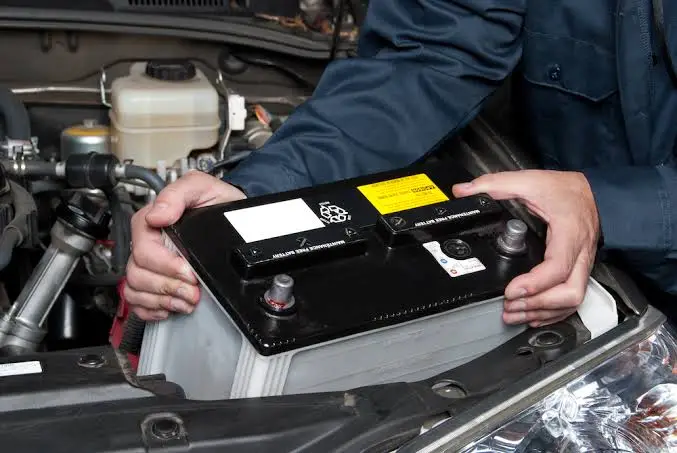
Yes, a car battery and inverter can work together, and it’s a common way people power small electronics during an outage or on the road. But a standard car battery isn’t actually built for this job long-term, and knowing why before you set one up will save you a shortened battery life and a few surprises.
Contents
How to Connect a Car Battery to an Inverter Safely
Most small- to mid-size inverters connect directly to a battery’s terminals using heavy-gauge cables, either alligator clamps for a temporary setup or bolted ring terminals for something more permanent.
- Match the inverter’s wattage to the wire gauge. Higher-wattage inverters draw more current, and undersized cables can overheat. Check the inverter’s manual for its recommended wire gauge rather than guessing.
- Connect the black (negative) lead first, then the red (positive) lead. Connecting in this order helps prevent sparking at the terminals, the same rule that applies with any multimeter or accessory connection to a battery.
- Use an inline fuse close to the battery, sized to the inverter’s maximum draw. This protects the wiring if something shorts, and most inverters designed for battery use will specify the fuse rating needed.
- Keep the setup ventilated. Batteries can release small amounts of gas under load, especially older or already-stressed ones, so avoid running this setup in a fully sealed space.
- Turn the inverter off before disconnecting. Disconnecting a live inverter can cause a spark at the terminals, same as connecting one under load.
Why a Car Battery Struggles at This Job
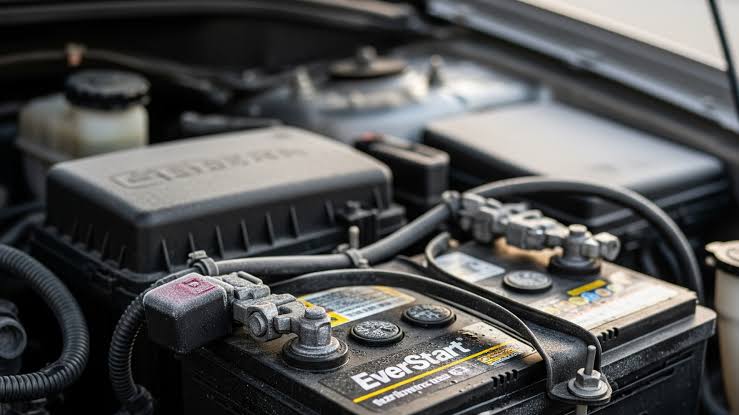
A standard car battery, sometimes called a starting or cranking battery, is built to deliver a short, very high burst of current to turn the engine over, then get topped back up almost immediately by the alternator once the car is running.
That’s a completely different job from what an inverter asks of it.
An inverter draws a slow, steady, sustained current, sometimes for hours. Car batteries aren’t designed for this kind of deep, extended discharge. Doing it repeatedly causes a few real problems over time.
Plates inside the battery degrade faster than they would from normal starting use. Sulfation builds up when a battery sits at a partial charge for extended periods, which is exactly what happens during a long inverter session.
And after enough cycles like this, many owners notice the same battery starts cranking the engine more weakly than before, even though the inverter use seemed unrelated to starting the car at all.
None of this means it’s unsafe to try occasionally. It means doing it as a regular routine will shorten the battery’s usable life noticeably faster than normal driving use would.
Car Battery vs. Deep-Cycle Battery for Inverter Use
A deep-cycle battery is built for exactly the opposite job a starting battery is built for. It’s designed to be discharged slowly over a longer period and recharged repeatedly without the same degradation a starting battery experiences under the same conditions.
If you’re only using the inverter occasionally, for an emergency or an outage that happens rarely, a standard car battery is a reasonable stopgap.
If you’re relying on this setup regularly, a proper deep-cycle or dedicated inverter/leisure battery will last significantly longer and perform more predictably under sustained load, and it’s worth the extra cost if the setup is a regular part of your routine rather than an occasional backup.
Will an Inverter Drain a Car Battery?
Yes, an inverter will drain a car battery, and how fast depends on two things, the battery’s capacity (measured in amp-hours) and the wattage of whatever the inverter is powering. A higher-wattage load pulls the battery down faster.
As a rough guide, running small electronics (lights, a phone charger, a small fan) draws relatively little and can run for several hours on a healthy battery. Running something heavier (a full-size TV, a fridge, power tools) will drain the same battery in a fraction of that time.
If you want a more exact runtime estimate, check the battery’s amp-hour rating and the device’s wattage, then account for the fact that a starting battery shouldn’t be run down past roughly 50% charge repeatedly without accelerating the wear described above.
Recommended Setup for Small Electronics
For light loads (phones, laptops, small lights, routers), a modest inverter in the 150 to 300-watt range paired with a healthy car battery is generally sufficient for short-duration use.
For anything heavier, sizing the inverter and battery properly matters more, and a dedicated deep-cycle setup becomes the more sensible long-term choice rather than leaning on a starting battery not designed for it.
Where This Matters Even More
In places with frequent power outages, using a car battery and inverter setup for backup power at home is already a common daily practice rather than an occasional emergency measure.
Here in Nigeria, for example, it’s routine for a car battery to get pulled into service as a stand-in inverter battery far more often than it would be elsewhere.
That regular, repeated use is exactly the pattern that wears a starting battery down faster than the same battery would wear from normal driving alone, which makes the deep-cycle alternative worth genuinely considering rather than treating a car battery as a permanent solution.
Will an inverter drain a car battery?
Yes. How quickly depends on the battery’s amp-hour capacity and the wattage of whatever’s connected to the inverter. Small electronics drain it slowly, heavier appliances drain it much faster.
How long will a car battery power an inverter?
It varies by battery size and load, but a healthy car battery can typically run small electronics for a few hours before needing a recharge. Heavier loads will drain it in a fraction of that time.
Can you charge a car battery with a home inverter?
A home inverter itself doesn’t charge a battery, it draws power from one. Charging a car battery requires a proper battery charger or the vehicle’s own alternator while running.
Is it bad to use a car battery for an inverter regularly?
Yes, if done often. Starting batteries aren’t built for the slow, sustained discharge an inverter demands, and regular use this way tends to shorten the battery’s life and weaken its cranking performance over time. A deep-cycle battery is the better long-term choice for regular use.



Leave a Reply