

These five car battery voltage readings cover almost everything you need to know before deciding whether your battery is fine, weak, or already in trouble.
1. 12.6V or higher, engine off. This is a fully charged, healthy battery at rest. Test after the car has sat for at least 15 to 30 minutes, not right after driving, since a fresh surface charge can read artificially high for a few minutes.
2. 12.2V to 12.4V, engine off. This range means the battery is roughly 50 to 75 percent charged. Not an emergency, but worth recharging and retesting rather than ignoring.
3. Below 12.0V, engine off. This is a discharged battery. It may still start the car once or twice, but it needs a proper charge, and repeated discharging like this shortens battery life over time. If you’re seeing this reading alongside other warning signs, check our list of signs of a failing car battery to see how many apply to your situation.
4. 9.6V or higher during cranking. This is the number that actually matters most. A battery can read fine at rest and still fail this test the moment the starter demands real current. Below roughly 8.5V under cranking load usually means a weak battery or a bad connection.
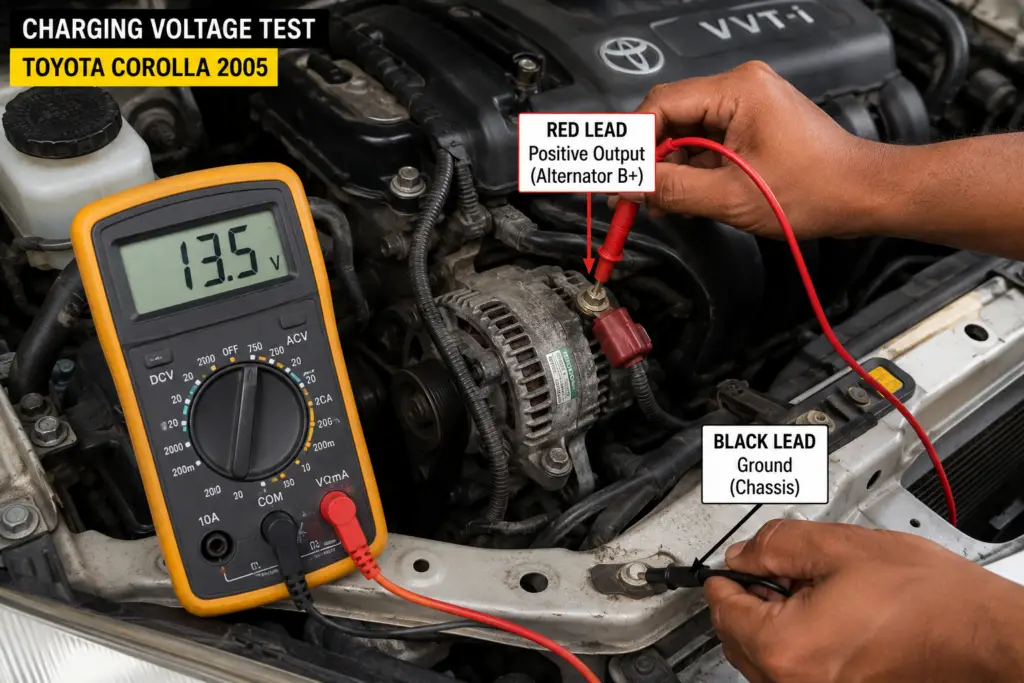
5. 13.5V to 14.7V, engine running. This confirms the alternator is charging properly. A reading stuck near 12V with the engine running points to a charging system problem, not the battery. Above roughly 14.5V to 15.0V consistently is overcharging and deserves attention too.
Why All Five Matter Together
A single reading rarely tells the full story. These car battery voltage readings work best when read as a set, resting voltage shows stored charge, cranking voltage shows real capability under load, and running voltage confirms the charging system is doing its job. For the full breakdown of each state and why sources sometimes disagree slightly on the exact numbers, see our complete guide on what car battery voltage should be.
Conclusion
Knowing these five numbers takes the guesswork out of a quick battery check. If any reading falls outside its healthy range, especially the cranking voltage, that’s the one worth acting on before it leaves you stranded rather than after.







Leave a Reply