where your car heals!

5 Car Battery Voltage Readings Every Owner Should Know

Published:

Updated:

using a battery to power an inverter
5 Car Battery Voltage Readings Every Owner Should Know

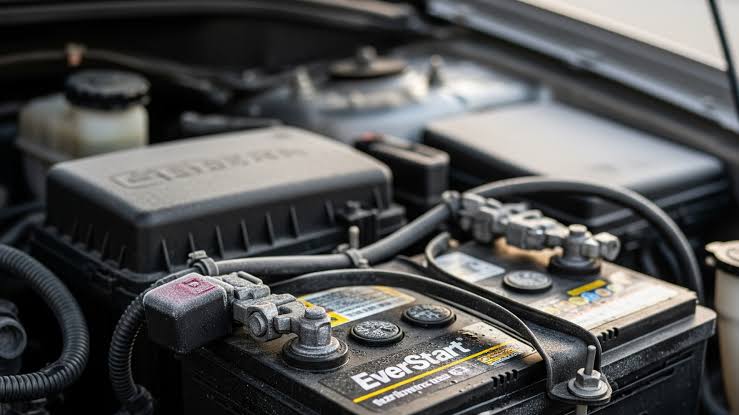
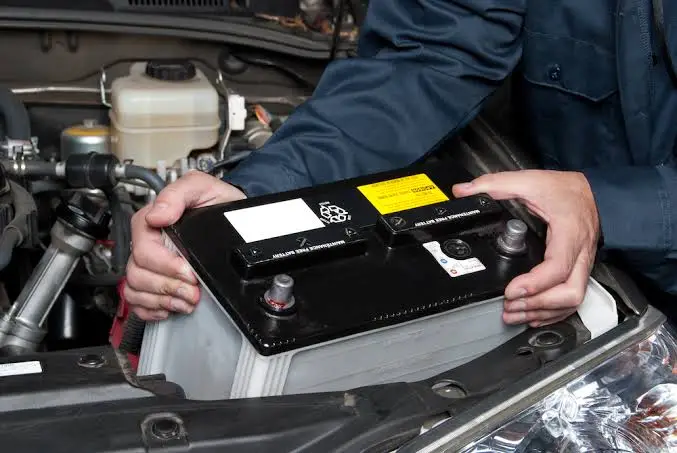
These five car battery voltage readings cover almost everything you need to know before deciding whether your battery is fine, weak, or already in trouble.

1. 12.6V or higher, engine off. This is a fully charged, healthy battery at rest. Test after the car has sat for at least 15 to 30 minutes, not right after driving, since a fresh surface charge can read artificially high for a few minutes.

2. 12.2V to 12.4V, engine off. This range means the battery is roughly 50 to 75 percent charged. Not an emergency, but worth recharging and retesting rather than ignoring.

3. Below 12.0V, engine off. This is a discharged battery. It may still start the car once or twice, but it needs a proper charge, and repeated discharging like this shortens battery life over time. If you’re seeing this reading alongside other warning signs, check our list of signs of a failing car battery to see how many apply to your situation.

4. 9.6V or higher during cranking. This is the number that actually matters most. A battery can read fine at rest and still fail this test the moment the starter demands real current. Below roughly 8.5V under cranking load usually means a weak battery or a bad connection.

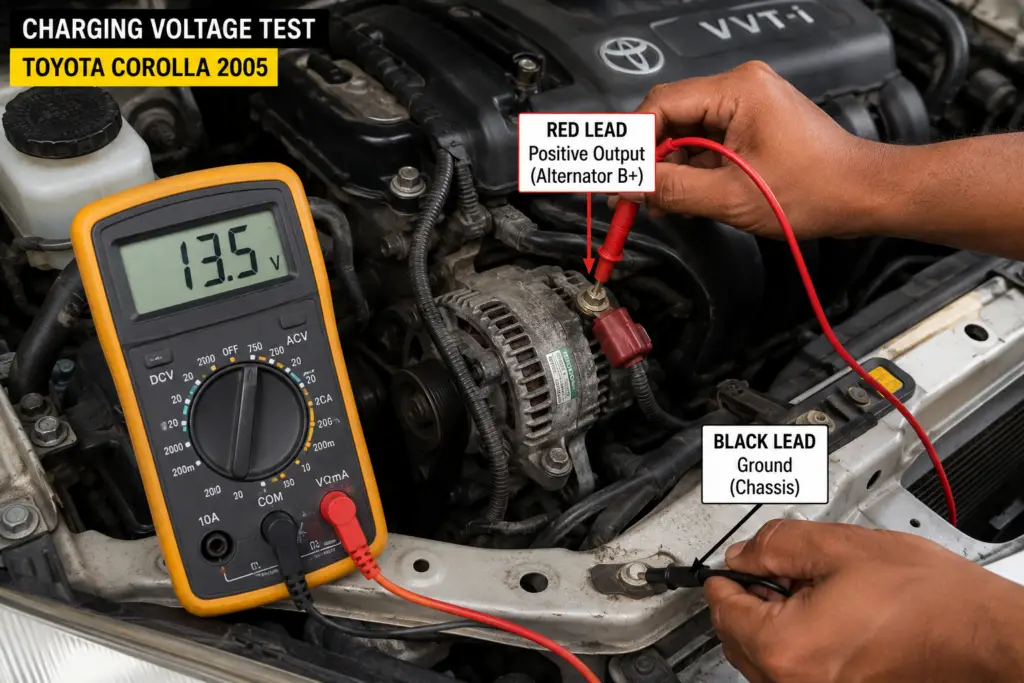
5. 13.5V to 14.7V, engine running. This confirms the alternator is charging properly. A reading stuck near 12V with the engine running points to a charging system problem, not the battery. Above roughly 14.5V to 15.0V consistently is overcharging and deserves attention too.

Why All Five Matter Together

A single reading rarely tells the full story. These car battery voltage readings work best when read as a set, resting voltage shows stored charge, cranking voltage shows real capability under load, and running voltage confirms the charging system is doing its job. For the full breakdown of each state and why sources sometimes disagree slightly on the exact numbers, see our complete guide on what car battery voltage should be.

Conclusion

Knowing these five numbers takes the guesswork out of a quick battery check. If any reading falls outside its healthy range, especially the cranking voltage, that’s the one worth acting on before it leaves you stranded rather than after.


Leave a Reply

Your email address will not be published. Required fields are marked *

Search

About us

Where Your Car Heals!
I’m Che Clovis, an auto electrician and diagnostics technician based in Abuja and the person behind every article on this site.

I’ve been working on cars since 2010. Over that time I’ve handled everything from stubborn no-start faults to wiring gremlins that took hours to trace, mostly on Japanese vehicles. Toyota and Honda are the two I know best, along with a wide range of other Japanese makes and European and American vehicles, including Mercedes-Benz and BMW. I work on both tokunbo (used-import) and new vehicles, which means I’ve seen how the same fault shows up differently depending on a car’s history, age, and where it’s spent its life.

My background combines hands-on apprenticeship training with a six-month automobile technology course under the TVET initiative. I’m currently preparing to begin EV-specific training because the industry is moving that way and I intend to move with it, but for now, my focus and deepest expertise are conventional petrol vehicle electrical systems: batteries and charging, starters and alternators, wiring and fuses, dashboard and lighting faults, and the electrical side of sensor and ECU-related problems. I also install GPS trackers, which comes up often in the same wiring and electrical work.

For diagnostics, I run a Thinkcar Pro as my main scan tool, with access to Autel and Launch equipment as well, and Topdon is a brand I rate highly and use when I can. Every diagnosis you read about on this site is checked against actual live data from tools like these, not guesswork.

I started writing about car electrical problems because I kept seeing the same thing: car owners either overpaying for guesswork repairs or getting advice online that was written by someone who has never actually opened a fuse box with a multimeter in hand. I lost my original site’s content when hosting lapsed, but not the three years of lessons that came from writing it. This version is being rebuilt properly, article by article, from real diagnostic experience rather than generic advice.

Ezoic
What you’ll find here: straight-to-the-point diagnostic guides for electrical faults, written the way I’d explain it to someone standing next to me at the car.

what the symptom means, what to check first, what most people get wrong, and when a problem genuinely needs a professional rather than a DIY fix. Where something is done differently because of local realities, heat, dust, fuel quality, or the quirks of tokunbo wiring, I say so plainly, because that’s often the missing piece in advice written for a different climate and market.

This site will keep growing as my own skills do, including into EV systems. If something here helped you actually fix your car instead of just understanding it a little better, it’s done its job.

— Che Clovis

Latest Posts