where your car heals!

4 Things to Know Before Using a Car Battery to Power an Inverter

Published:

Updated:

using a battery to power an inverter
car battery replacement

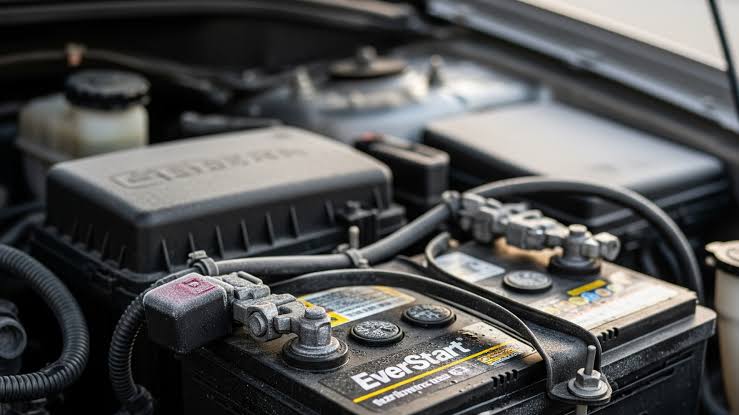
Using a car battery to power an inverter is common practice, especially during outages, but a few things about how it actually holds up matter more than most people realize before they set one up.

1. It works, but it wasn’t built for this job.

A car battery is designed to deliver one short, very high burst of current to crank the engine, then get topped straight back up by the alternator once the car is running.

An inverter asks for the opposite, a slow, steady draw that can last for hours at a time. The battery will do it, and for an occasional emergency it’s a perfectly reasonable stopgap, but it’s working outside the job it was engineered for every time you use it this way.

2. The connection has to be done properly, not just clamped on.

Match the inverter’s wattage to the wire gauge you’re using, undersized cables can overheat under sustained load.

Connect the black negative lead to the battery first, then the red positive lead. Connecting in this order helps prevent sparking at the terminals.

Use an inline fuse close to the battery, sized to the inverter’s maximum draw, so a short in the wiring doesn’t turn into something worse.

And keep the whole setup ventilated, batteries can release small amounts of gas under sustained load, especially older ones, so this isn’t a job for a fully sealed space.

3. Repeated use wears it down faster than normal driving ever would.

A starting battery discharged slowly and repeatedly, the way an inverter session does, builds up sulfation and degrades its internal plates faster than the same battery would wear from ordinary starting duty.

Owners who do this regularly often notice the same battery starts cranking the engine more weakly over time, even though the inverter use seems completely unrelated to starting the car.

A deep-cycle or dedicated inverter battery is built for exactly this kind of discharge cycle and won’t wear down the same way, so if this setup is a regular part of your routine rather than a rare emergency, it’s worth the extra cost.

4. If you rely on this often, it stops being occasional wear and becomes daily wear.

In places with frequent power outages, a car battery pulled into service as backup power isn’t a once-a-year emergency measure, it’s routine. That changes the math entirely.

The wear that would be negligible from an occasional outage becomes cumulative and noticeable within months when it’s happening several times a week, which is exactly when the case for switching to a proper deep-cycle battery stops being optional and starts being the smarter long-term decision.

Full Breakdown

For the complete safe connection steps, the deeper explanation of why starting batteries and deep-cycle batteries behave so differently under this kind of load, and honest runtime expectations, see our full guide on using a car battery to power an inverter.

Conclusion

A car battery can power an inverter, that part isn’t in question. What matters is knowing whether you’re using it as an occasional stopgap or leaning on it as a habit, because those two situations call for genuinely different equipment. Know which one you’re actually doing before the battery makes that decision for you by failing early.

7 responses to “4 Things to Know Before Using a Car Battery to Power an Inverter”

  1. Click for More Info Avatar
    Click for More Info

    Greate pieces. Keep posting such kind of info on your page.
    Im really impressed by your site.
    Hey there, You have performed an incredible job. I will certainly digg it and for my part suggest to my friends.
    I am sure they’ll be benefited from this website.

  2. Recommended Article Avatar
    Recommended Article

    I do not even know how I ended up here, but I thought this
    post was great. I do not know who you are but certainly you’re going to a famous blogger
    if you are not already 😉 Cheers!

    1. clovisautocare Avatar
      clovisautocare

      Thanks, I appreciate it. Tell me what you want to learn next

  3. Secret Tips Article Avatar
    Secret Tips Article

    Hey there, I think your blog might be having browser compatibility issues.
    When I look at your blog site in Chrome, it looks fine but when opening in Internet Explorer, it has
    some overlapping. I just wanted to give you a quick
    heads up! Other then that, wonderful blog!

    1. clovisautocare Avatar
      clovisautocare

      Thanks for the observation

  4. Budaya Adat Avatar
    Budaya Adat

    Hi! I know this is kind of off-topic but I had to ask.
    Does managing a well-established website such as yours take a large
    amount of work? I am brand new to running a blog however I do write in my
    journal daily. I’d like to start a blog so
    I can easily share my own experience and views online.
    Please let me know if you have any suggestions or tips for brand
    new aspiring blog owners. Thankyou!

    1. clovisautocare Avatar
      clovisautocare

      Thanks for reaching out. Like everyone will say, what is the goal? Do you want to make money from it or just document your journey? Like, the goal will change the perspective of the advice reply so I can help you with what I know

Leave a Reply

Your email address will not be published. Required fields are marked *

Search

About us

Where Your Car Heals!
I’m Che Clovis, an auto electrician and diagnostics technician based in Abuja and the person behind every article on this site.

I’ve been working on cars since 2010. Over that time I’ve handled everything from stubborn no-start faults to wiring gremlins that took hours to trace, mostly on Japanese vehicles. Toyota and Honda are the two I know best, along with a wide range of other Japanese makes and European and American vehicles, including Mercedes-Benz and BMW. I work on both tokunbo (used-import) and new vehicles, which means I’ve seen how the same fault shows up differently depending on a car’s history, age, and where it’s spent its life.

My background combines hands-on apprenticeship training with a six-month automobile technology course under the TVET initiative. I’m currently preparing to begin EV-specific training because the industry is moving that way and I intend to move with it, but for now, my focus and deepest expertise are conventional petrol vehicle electrical systems: batteries and charging, starters and alternators, wiring and fuses, dashboard and lighting faults, and the electrical side of sensor and ECU-related problems. I also install GPS trackers, which comes up often in the same wiring and electrical work.

For diagnostics, I run a Thinkcar Pro as my main scan tool, with access to Autel and Launch equipment as well, and Topdon is a brand I rate highly and use when I can. Every diagnosis you read about on this site is checked against actual live data from tools like these, not guesswork.

I started writing about car electrical problems because I kept seeing the same thing: car owners either overpaying for guesswork repairs or getting advice online that was written by someone who has never actually opened a fuse box with a multimeter in hand. I lost my original site’s content when hosting lapsed, but not the three years of lessons that came from writing it. This version is being rebuilt properly, article by article, from real diagnostic experience rather than generic advice.

Ezoic
What you’ll find here: straight-to-the-point diagnostic guides for electrical faults, written the way I’d explain it to someone standing next to me at the car.

what the symptom means, what to check first, what most people get wrong, and when a problem genuinely needs a professional rather than a DIY fix. Where something is done differently because of local realities, heat, dust, fuel quality, or the quirks of tokunbo wiring, I say so plainly, because that’s often the missing piece in advice written for a different climate and market.

This site will keep growing as my own skills do, including into EV systems. If something here helped you actually fix your car instead of just understanding it a little better, it’s done its job.

— Che Clovis

Latest Posts